
The Natural Wonders of Ethiopia: Mountains, Lakes, and Volcanoes
Ethiopia is a land of extraordinary contrasts — soaring mountains, vast highland plateaus, shimmering lakes, deep gorges, and fiery volcanoes. Located in the Horn of Africa, this ancient country holds some of the most dramatic and biologically diverse landscapes on the continent. From the cool peaks of the highlands to the blazing heat of the Danakil Depression, Ethiopia’s natural wonders are both breathtaking and scientifically fascinating.
This article explores Ethiopia’s mountains, lakes, and volcanoes, highlighting their biodiversity and the dramatic landscapes that make the country one of Africa’s most unique ecological treasures.
The Simien Mountains – A Dramatic Highland Kingdom


The Simien Mountains rise like a natural fortress in northern Ethiopia. Often called the “Roof of Africa,” this mountain range is home to Ras Dashen, the highest peak in Ethiopia at over 4,500 meters. The landscape is defined by jagged peaks, deep valleys, and dramatic cliffs that drop thousands of meters into the lowlands below.
The mountains were formed millions of years ago by volcanic activity and erosion. Over time, wind and water carved deep gorges and sharp escarpments, creating scenery that rivals the Grand Canyon.
Biodiversity here is remarkable. The Simien Mountains are home to several endemic species found nowhere else in the world. The Gelada baboon, with its striking red chest patch, grazes peacefully on the high-altitude grasslands. The rare Walia ibex, a wild mountain goat, clings skillfully to steep cliffs. The endangered Ethiopian wolf also roams these highlands.
Recognized for its ecological importance, the Simien Mountains National Park is a UNESCO World Heritage Site. It represents one of Africa’s most important highland ecosystems and offers unforgettable trekking experiences through landscapes that feel almost otherworldly.
The Bale Mountains – A Biodiversity Hotspot


In southeastern Ethiopia lies the vast and ecologically rich Bale Mountains. This region is one of Africa’s most significant biodiversity hotspots. The Bale Mountains include the Sanetti Plateau, one of the largest Afro-alpine habitats on the continent.
The dramatic contrast between alpine grasslands and the dense Harenna Forest creates a unique ecological zone. The Harenna Forest, filled with giant trees and thick vegetation, feels almost like a tropical rainforest, while the high plateau above it resembles a cold alpine desert.
The Bale Mountains are the stronghold of the Ethiopian wolf, the rarest canid in the world. These wolves hunt giant mole rats in the open grasslands. Other endemic species include the Bale monkey and the mountain nyala. The plant life is equally diverse, with giant lobelias and rare high-altitude flowers creating a surreal landscape.
The region is protected within the Bale Mountains National Park, which plays a critical role in conserving Ethiopia’s water resources and wildlife. Many of Ethiopia’s major rivers originate from these highlands, supporting millions of people downstream.
The Great Rift Valley Lakes – Shimmering Blue Jewels


Running through Ethiopia is the Great Rift Valley, a massive geological fault system that stretches from the Middle East to southern Africa. Within Ethiopia, this rift is dotted with beautiful lakes that form rich ecosystems and bird sanctuaries.
Lakes such as Lake Ziway, Lake Abijatta, and Lake Langano provide critical habitats for wildlife. Flamingos gather in large numbers on the alkaline waters of Lake Abijatta, creating a spectacular pink shoreline. Lake Ziway supports fishing communities and hosts hundreds of bird species, including pelicans and storks.
The dramatic landscapes around these lakes include volcanic cones, acacia forests, and open savannas. The lakes also support agriculture and local livelihoods, making them essential not only ecologically but economically.
These water bodies reflect the sky like mirrors, offering peaceful beauty that contrasts with the rugged mountains nearby.
Lake Tana – The Source of the Blue Nile


In the northwestern highlands lies Lake Tana, Ethiopia’s largest lake and the source of the Blue Nile River. The lake sits at an elevation of nearly 1,800 meters and covers more than 3,000 square kilometers.
Lake Tana is not only geographically significant but also biologically rich. It hosts unique fish species found nowhere else. The wetlands around the lake provide habitat for hippos and numerous bird species.
The lake’s waters flow out at the spectacular Blue Nile Falls, locally known as Tis Issat, meaning “smoking water.” During the rainy season, the falls create thunderous cascades surrounded by mist and rainbows.
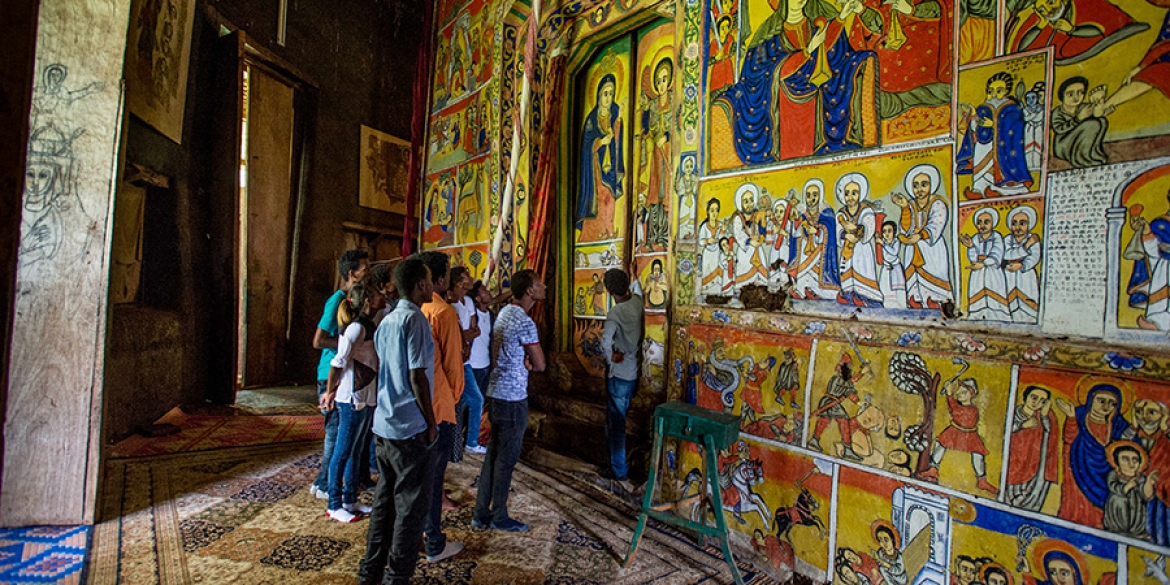
Lake Tana also holds cultural importance, with ancient monasteries located on its islands. Together, the lake and its surroundings form a harmonious blend of nature, history, and biodiversity.
The Danakil Depression – A Volcanic Wonderland


One of the most extreme environments on Earth is the Danakil Depression, located in northeastern Ethiopia. It is one of the hottest and lowest places on the planet, sitting below sea level.
The landscape appears almost alien. Bright yellow sulfur springs, green and orange mineral deposits, and vast salt flats create a surreal, colorful panorama. The geothermal activity here is intense due to the tectonic plates slowly pulling apart.
Within this harsh environment stands Erta Ale, one of the few volcanoes in the world with a persistent lava lake. At night, the glowing red lava illuminates the dark desert sky, offering one of the most dramatic natural sights in Africa.
Despite the extreme heat, life persists. Microorganisms thrive in acidic pools, and the Afar people have adapted to this environment for centuries, harvesting salt from the flats. The Danakil Depression showcases the raw geological forces shaping the Earth.
The Awash Valley – Wildlife and Waterfalls


The Awash National Park lies east of Addis Ababa and represents a blend of savanna, volcanic landscapes, and river ecosystems. The Awash River flows dramatically through the park, forming waterfalls and supporting wildlife along its banks.
Mount Fentale, a dormant volcano, overlooks the area and adds to the park’s dramatic scenery. The region is home to oryx, gazelles, baboons, and more than 450 species of birds.
The Awash Valley also has historical importance, as early human fossils have been discovered in nearby regions, emphasizing Ethiopia’s role in human evolution.
The park’s mix of volcanic terrain and wildlife-rich savanna makes it one of Ethiopia’s most accessible and scenic natural areas.
A Land of Contrast and Ecological Richness
Ethiopia’s natural wonders are defined by contrast. Cool highland plateaus rise above scorching deserts. Deep gorges slice through fertile farmland. Volcanic craters sit beside tranquil lakes.
The country’s biodiversity is shaped by its varied elevations and climates. From Afro-alpine ecosystems to tropical forests and desert basins, Ethiopia supports thousands of plant and animal species. Many of these species are endemic, meaning they exist nowhere else on Earth.
These dramatic landscapes are not only beautiful but vital. They provide water, fertile soil, climate regulation, and livelihoods for millions of people. Conservation efforts are increasingly important to protect these fragile ecosystems from climate change, deforestation, and population pressure.